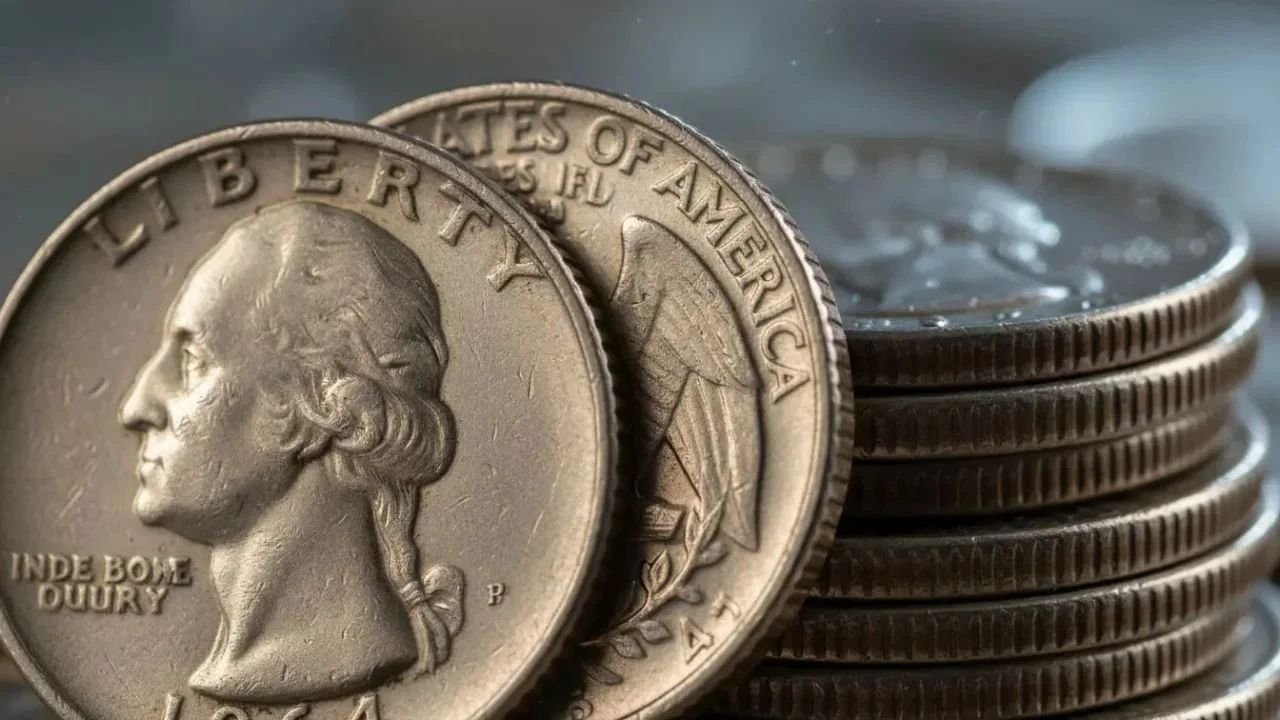
Washington quarters have been part of U.S. coinage since 1932 and remain one of the most studied and collected American coin series. While millions were struck for circulation, a very small number of Washington quarters stand apart due to extreme rarity, exceptional condition, early proof status, or dramatic minting errors. In elite cases, these coins have sold for more than $50,000, with some reaching significantly higher levels at major auctions.
This guide explores nine Washington quarter types capable of exceeding the $50,000 mark, explains why they are so valuable, and provides practical guidance on how to identify and protect a potentially life-changing discovery.
How to Spot Rare Washington Quarters
Identifying a high-value Washington quarter begins with careful observation. Always confirm the date, mintmark, and surface quality before assuming rarity. A 10x magnifying loupe is essential for examining fine details such as mintmarks, lettering, and Washington’s portrait.
Key signs of exceptional value include very low mintage years, proof finishes, pristine uncirculated surfaces, unusually sharp strikes, and genuine mint errors. Many rare quarters appear ordinary at first glance, which is why patience and precision are critical.
1. 1932-D Washington Quarter
The 1932-D is one of the most famous key dates in the entire Washington quarter series. Struck during the first year of issue, it had a relatively small mintage and saw heavy circulation.
How to spot it: Look for the “D” mintmark on the reverse beneath the eagle. High-value examples show strong hair detail on Washington and sharp feather definition. Mint State examples are exceptionally rare and command premium prices.
2. 1932-S Washington Quarter
Closely following the Denver issue, the 1932-S is another foundational rarity. Although slightly more available than the 1932-D, it remains scarce in all grades and especially difficult to find in high condition.
How to spot it: Check for the “S” mintmark under the eagle. Examine Washington’s cheek and jawline closely, as these areas often show wear or marks that reduce value.
3. 1932 Proof Washington Quarter
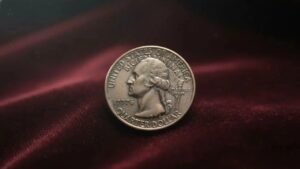
Proof Washington quarters from 1932 are among the rarest modern U.S. proofs. They were produced in extremely limited quantities and sold directly to collectors, resulting in very few survivors today.
How to spot it: Proof coins feature mirror-like fields, crisp squared rims, and sharp design elements. The contrast between the fields and devices is noticeably superior to circulation strikes.
4. Ultra High-Grade Mint State Quarters (MS67 and Higher)
Even common-date Washington quarters can surpass $50,000 if they survive in nearly flawless condition. Coins graded MS67 or higher are extraordinarily rare due to decades of handling and storage.
How to spot it: Look for intense original luster, zero wear, and minimal contact marks. Washington’s hair, eye, and cheek should appear clean and sharply defined.
5. Doubled Die Obverse Varieties
Doubled die obverse quarters result from errors during die creation, causing true raised doubling on design elements. Strong examples from early Washington quarter years are especially valuable.
How to spot it: Inspect the date, LIBERTY, and Washington’s hair for clear, rounded doubling. Flat or shelf-like doubling usually indicates machine doubling and carries little value.
6. Repunched Mintmark and Overmintmark Errors
Before mintmarks were added to dies mechanically, they were punched by hand. Mistakes sometimes occurred, creating repunched mintmarks or overmintmarks.
How to spot it: Under magnification, the mintmark may show overlapping outlines or a shadow-like secondary impression. Early-date examples are the most desirable.
7. Off-Metal and Wrong-Planchet Strikes
Washington quarters struck on the wrong metal planchet are among the most dramatic and valuable errors in U.S. numismatics. These include strikes on bronze, copper, or other unintended metals.
How to spot it: Check the coin’s weight and color. Off-metal strikes often appear lighter, darker, or unusually toned compared to standard silver quarters.
8. Broadstruck and Severely Misaligned Errors
Broadstruck and misaligned quarters occur when the planchet is improperly seated during striking. Most were caught and destroyed, making surviving examples highly collectible.
How to spot it: The rim may be weak or missing, and the design can appear stretched or off-center. Strong detail combined with a bold error increases value substantially.
9. Mule Coins and Unique Die Pairings
Mule coins are produced when mismatched obverse and reverse dies are paired together. These are among the rarest mint errors ever documented and can reach extraordinary prices.
How to spot it: Look for design elements that clearly do not belong together. Because these errors are complex, professional authentication is mandatory.
Practical Checks Before Assuming High Value
Before concluding that a Washington quarter is worth more than $50,000, disciplined verification is essential. Many coins that appear rare turn out to be normal after closer inspection.
Use a magnifier to examine mintmarks and surface texture
Weigh and measure the coin to confirm proper specifications
Look for unmistakable proof characteristics or genuine mint errors
Never clean the coin, as this permanently reduces value
Submit promising coins to professional grading services such as PCGS or NGC
Real-World Example of a High-Value Discovery
A collector examining an inherited coin group noticed an early Washington quarter with unusually reflective surfaces. Instead of selling immediately, the coin was professionally graded and authenticated as a genuine 1932 proof. It later sold at auction for a five-figure sum, demonstrating the importance of expert confirmation and careful handling.
What to Do If You Think You Found One
Handle the coin only by its edges and store it in a non-PVC holder. Take clear photographs under neutral lighting, including close-ups of the mintmark and edge. Compare your coin with verified reference images and consult reputable dealers or grading services before making any selling decisions.
Summary
Washington quarters may be common in circulation, but a select group of key dates, early proofs, elite-condition survivors, and dramatic mint errors can exceed $50,000 in value. Careful inspection, conservative handling, and professional grading are critical to confirming and preserving this level of rarity. For collectors willing to look closely, the Washington quarter series continues to offer remarkable opportunities hidden in plain sight.